
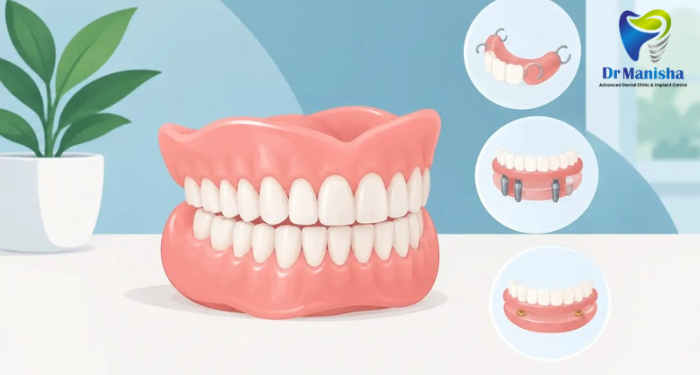
Missing teeth can affect more than just your appearance. They can make chewing difficult, affect speech, and reduce confidence while smiling or interacting with others. Dental dentures are a commonly used solution for replacing missing teeth and restoring basic oral functions. With proper planning and regular dental care, dentures can help improve comfort, appearance, and quality of life.
If you are considering tooth replacement options, consulting an experienced Dentist in Chinchwad can help you understand which type of dentures may be suitable for your dental needs.
What Are Dental Dentures?
Dental dentures are removable artificial teeth designed to replace missing natural teeth. They are custom-made to fit the shape of your gums and mouth. Dentures help restore the appearance of your smile and support everyday activities such as eating and speaking.
They are generally recommended for people who have lost some or all of their natural teeth due to tooth decay, gum disease, injury, or age-related dental problems.
Types of Dental Dentures
Depending on the number of missing teeth and the patient’s oral condition, different types of dentures may be recommended.
1. Complete Dentures
Complete dentures are used when all natural teeth in the upper or lower jaw, or both jaws, are missing. They are designed to replace an entire set of teeth and restore facial appearance and chewing function.
2. Partial Dentures
Partial dentures are suitable for individuals who have lost only a few teeth but still have some healthy natural teeth remaining. They fill the gaps and help maintain the arrangement of the remaining teeth.
3. Immediate Dentures
Immediate dentures are prepared before tooth extraction and can be placed immediately after the natural teeth are removed. They help patients avoid remaining without teeth during the initial healing period. Adjustments may be required as the gums heal and change shape.
4. Implant-Supported Dentures
These dentures are supported by dental implants placed in the jawbone. They can provide improved stability compared with conventional removable dentures. Their suitability depends on bone condition, oral health, and individual treatment requirements.
Benefits of Dental Dentures
Dental dentures offer several benefits for people with missing teeth:
- Improved Appearance: They help restore the natural appearance of your smile.
- Better Chewing Ability: Dentures can make it easier to eat a wider variety of foods.
- Clearer Speech: Replacing missing teeth may help improve pronunciation and speech.
- Facial Support: Dentures help support the lips and cheeks, which may otherwise appear sunken after tooth loss.
- Improved Confidence: Restoring missing teeth can help people feel more comfortable while smiling and speaking.
Who Needs Dental Dentures?
Dentures may be recommended for individuals who have lost multiple teeth or all their natural teeth. They can also be considered when remaining teeth are severely damaged or cannot be preserved.
A dental examination is necessary to evaluate gum health, jawbone condition, remaining teeth, and overall oral health before selecting the appropriate denture treatment.
How to Take Care of Your Dentures
Proper denture care is important for maintaining oral hygiene and extending the life of your dentures.
- Clean your dentures daily using a suitable denture cleanser.
- Remove removable dentures before sleeping unless your dentist advises otherwise.
- Handle dentures carefully to prevent accidental damage.
- Clean your gums, tongue, and remaining natural teeth regularly.
- Keep dentures in water or a recommended soaking solution when not in use.
- Visit your dentist regularly for fit checks and adjustments.
Avoid using hot water because it may change the shape of dentures. If your dentures become loose or uncomfortable, do not try to adjust them yourself.
When Should You Visit a Dentist?
If you experience difficulty chewing, missing teeth, loose dentures, gum irritation, or discomfort while wearing dentures, seek professional dental advice. Poorly fitting dentures may cause sore spots and affect daily activities.
Dr. Manisha Pandhare, Dentist in Chinchwad, provides dental evaluation and guidance to help patients understand suitable tooth replacement options. The right denture solution depends on individual dental needs and oral health conditions.
To learn more about available denture treatment options, visit Dental Dentures Treatment in Chinchwad.
Conclusion
Missing teeth do not have to affect your smile and everyday comfort. Dental dentures can help restore missing teeth, improve chewing ability, support speech, and enhance facial appearance. Choosing the right type of dentures and maintaining proper oral hygiene are essential for long-term comfort.
Consult an experienced dentist for a personalized evaluation and guidance on suitable denture options. Taking timely steps towards tooth replacement can help you enjoy a healthier and more confident smile.
FAQs
1. Are dental dentures comfortable to wear?
Dentures are custom-made to fit your mouth. Some initial adjustment may be needed as you get used to wearing them.
2. How long do dental dentures last?
Their lifespan depends on the material, usage, maintenance, and changes in your gums and jawbone. Regular dental check-ups help maintain a proper fit.
3. Can I eat normally with dentures?
Yes, dentures can help restore chewing ability. Start with soft foods and gradually introduce other foods as you become comfortable.
4. Are dentures removable?
Conventional complete and partial dentures are removable. Implant-supported options may offer greater stability.
5. How often should I visit a dentist after getting dentures?
Regular dental visits are important to check their fit, examine oral tissues, and identify any adjustments needed.